


Key Takeaways
- Impacted wisdom teeth are third molars that stay trapped in your gums or jawbone.
- About 9 in 10 people have at least one impacted wisdom tooth.
- Signs can include swollen gums, jaw soreness, bad breath, or no symptoms at all.
- Not every impacted tooth needs surgery, and an X-ray helps the dentist decide.
- Regular checkups help spot changes early for you and your teens.
Your teen mentions a sore spot at the back of their mouth. Or maybe you’ve felt a dull ache behind your own molars that comes and goes. Families at Springbank Dental Centre ask about wisdom teeth often, and the questions tend to pop up during the busy high school and university years.
An impacted wisdom tooth is a third molar that stays trapped in your gums or jawbone instead of coming in fully. Many are found at routine checkups, often before anyone feels a twinge. If removal ever comes up, the team offers comfort options like conscious sedation, which uses medication to help you feel calm and relaxed during treatment.
What Is an Impacted Wisdom Tooth?
Wisdom teeth are your third molars. They’re the last teeth to come in, usually in your late teens or early 20s, long after the rest of your adult smile has settled into place.
When a wisdom tooth is impacted, it’s trapped. It stays partly or fully stuck in your gums or jawbone.
How Many Wisdom Teeth Can You Have?
Most people have four wisdom teeth. Some have three, two, one, or none at all. Your teen might have a different count than you, and that’s okay.
Why Wisdom Teeth Get Stuck
A wisdom tooth usually gets stuck for one of these reasons:
- Your jaw doesn’t have enough room for the tooth.
- The tooth grows in sideways.
- The tooth sits tilted in the jawbone.
The 3 Types of Impacted Wisdom Teeth
Impacted teeth are grouped by how far they’ve made it out of the bone. Here are the three types:
- A soft tissue impaction means the tooth has come through the bone but is still under your gums.
- A partial bony impaction means part of the tooth stays in the bone.
- A full bony impaction means the tooth stays completely inside your jawbone.
How Common Are Impacted Wisdom Teeth?
Impacted wisdom teeth are common, but not everyone experiences symptoms or needs removal.
Not everyone needs surgery to remove them, either.
Signs & Symptoms of Impacted Wisdom Teeth
Some impacted teeth make themselves known. Others stay quiet for years.
Gum & Jaw Changes
The first clues often show up at the very back of your mouth. Watch for these changes:
- Your gums near the back look red, swollen, or feel tender.
- Your gums bleed when you brush or floss.
- Your jaw feels sore, or it’s hard to open your mouth.
Other Signs to Watch For
Some signs don’t feel connected to your teeth at first. These can include:
- You notice bad breath or a bad taste in your mouth.
- Biting or chewing feels uncomfortable.
- You get headaches or swollen glands in your neck.
When There’s No Pain at All
An impacted tooth can sit quietly without any pain, so you may not know it’s there.
Discomfort can also come and go. It might settle down for a while, then return. Regular checkups help the team spot changes early, even when you feel fine.
How Serious Is an Impacted Wisdom Tooth?
It depends on the tooth. One person’s impacted tooth may stay quiet, while another person’s needs attention.
What the Dentist Looks At
The dentist weighs a few details before making a recommendation:
- The dentist checks the tooth’s position and how close it sits to the jaw nerve.
- The dentist asks about pain, swelling, or trouble cleaning the area.
- The dentist considers your age and your overall health.
Possible Problems Down the Road
Some impacted teeth can cause issues later on, such as:
- The gums around the tooth can become infected and swollen.
- The tooth can press on neighbouring teeth and shift your bite.
If you notice signs of infection, like swelling, a bad taste, or tender gums that persist or get worse, book a visit soon.
When to See a Dentist in SW Calgary About Wisdom Teeth
If you spot any of the signs above, or your teen is heading into their late teens, it’s a good time to check in with a dentist in SW Calgary.
What Happens at Your Visit
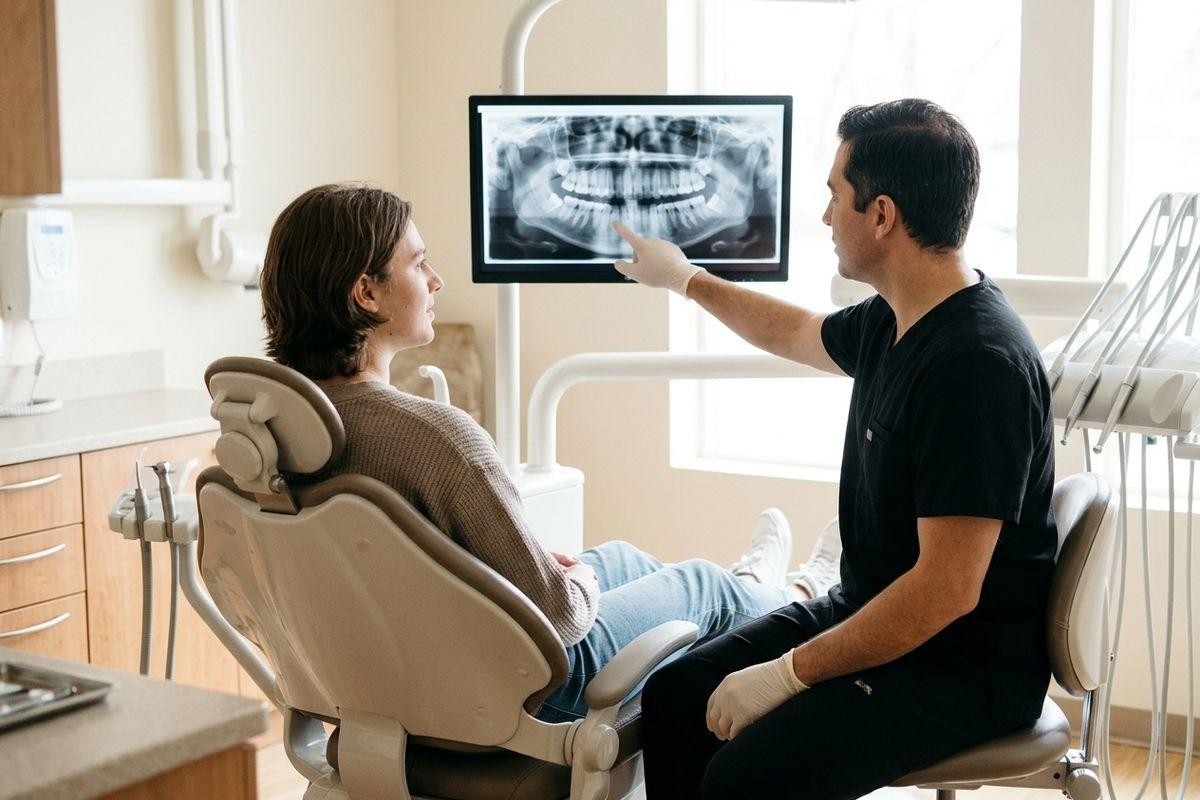
Your dentist may recommend a panoramic X-ray, also called a panorex. It’s one wide image of your whole mouth and both jaws.
The dentist uses it to check whether there’s room for the tooth, how it’s positioned, and whether removal makes sense. If you feel nervous, ask the team about comfort and sedation options.
Daily Care in the Meantime
You can’t prevent an impacted tooth, but you can keep the area clean while you wait.
Brush and floss gently around your back teeth, where food likes to hide. Keep regular visits on the calendar for you and your teens.
Wisdom teeth questions are a normal part of family life, and you don’t have to sort them out alone. If you’re looking for a dentist in SW Calgary, Springbank Dental Centre welcomes families from Aspen Woods, West Springs, Coach Hill, Signal Hill, and beyond. Book a visit for yourself or your teen, and the team can take a look and talk through your options with you.